

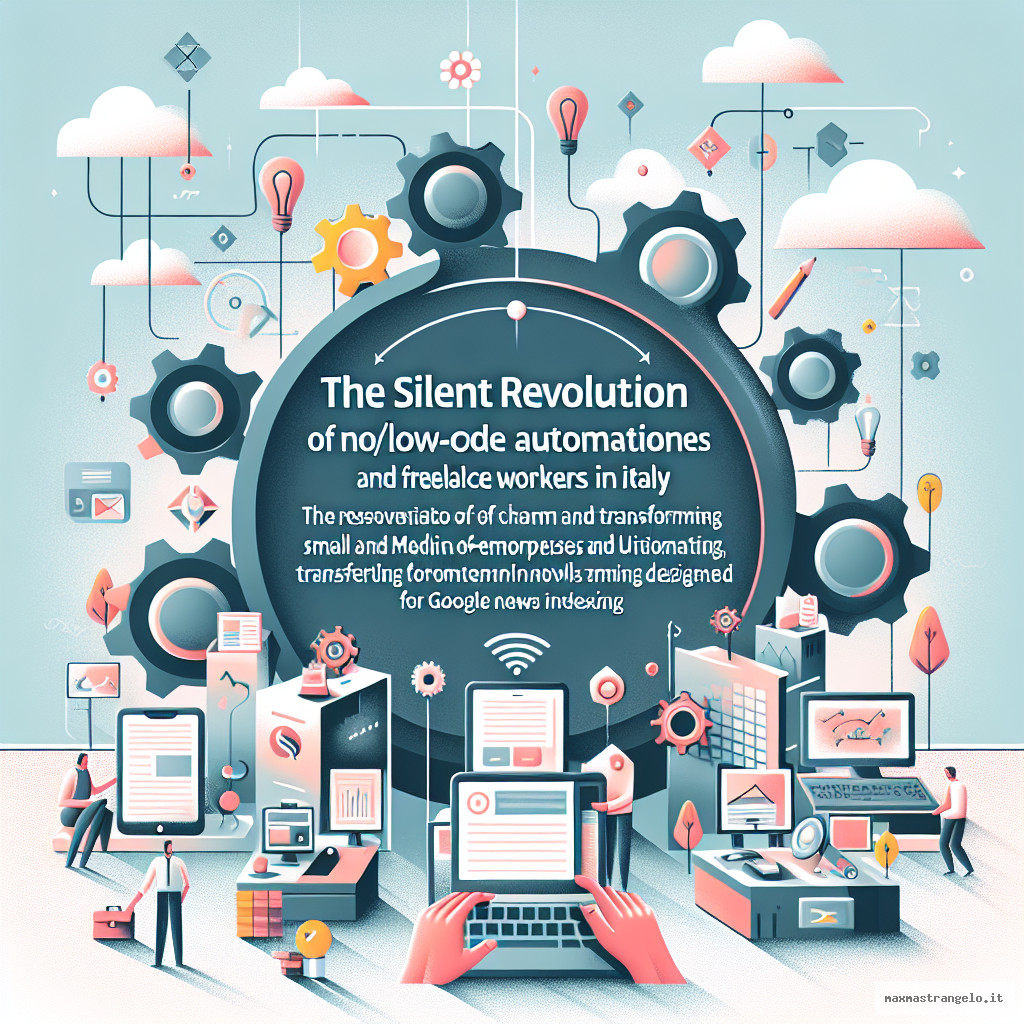
2025 is proving to be a crucial year for Italian small and medium-sized enterprises (SMEs) and freelancers who want to digitize and optimize their processes without investing in expensive developers. The trend of no/low-code automations is rapidly winning over the self-employed and local business world due to its ease of use, speed of implementation and low cost.
## Why no/low-code automations are key for Italian SMEs
No-code and low-code solutions make it possible to create automated workflows, custom applications, and integrations between software without writing a line of code or using very little code. In practice, even those without advanced technical skills can create effective automations to streamline repetitive tasks such as customer management, billing or marketing.
For a small artisan or freelance consultant, this means saving time and money that used to be absorbed by manual tasks or outside programmers. In addition, the speed with which processes can be tested and modified makes adoption even more convenient.
## Concrete examples: how to use no/low-code automations in the enterprise
- **Automatic billing:** connect a management system with accounting software to issue invoices automatically upon completion of a project or sale.
- **Lead management:** integrate the website with CRM and email marketing tools to automatically follow up with prospects after an inquiry form.
- **Real-time reporting:** create customized dashboards that aggregate data from multiple sources (social, sales, customers) and update numbers without manual intervention.
- **Appointment scheduling:** synchronize calendars and send reminders automatically, reducing holes and no-shows.
- **Approval workflows:** define digital processes for internal approvals or authorizations, for example, for orders or expenses.
These are just a few common examples, but the versatility of no/low-code platforms opens up virtually endless possibilities, adapting to every industry.
## How to get started: 3 tips for SMEs and freelancers who want to digitize
1. **Identify key processes to automate:** start with tasks that are repetitive or waste your most time and could be standardized.
2. **Choose the right platform:** check usability, available integrations and costs. Some popular solutions include Zapier, Make, Airtable, and Microsoft Power Automate.
3. **Start small and scale:** experiment with one or two simple streams, monitor the results, and then gradually expand the use of automations.
With a pragmatic approach, even a freelancer with no technical experience can quickly gain a productive boost and free up resources to devote to their core business.
—
### Practical Takeaway
- No/low-code automations save time and costs without the need for professional programmers.
- Automatic flows can be created for daily tasks such as billing, customer management and appointment scheduling.
- Starting with simple processes and choosing the right platform makes all the difference in successful automation.
—
If you are an SME or freelancer and want to find out how to simplify your business with no/low-code automation, don't miss the opportunity to learn more about these innovative solutions-the future of digital work is already here, just a click away!




 English
  Italiano
  Español de México